

The smartphone is not disappearing, but its role as the unquestioned center of digital life is being reconsidered. The world’s largest technology companies are preparing for a future in which computing is less dependent on a single glass rectangle and more distributed across wearables, vehicles, homes, workplaces, cloud infrastructure, artificial intelligence agents, and mixed reality interfaces.
TLDR: Tech giants are moving beyond smartphones by investing in AI assistants, smart glasses, spatial computing, robotics, connected homes, and powerful cloud platforms. For example, a worker could receive meeting notes through lightweight glasses, ask an AI agent to summarize customer data, and control office systems without touching a phone. Smartphone sales have matured in many markets, with replacement cycles often stretching beyond three years, pushing companies to search for the next major computing platform. The likely future is not one device replacing the phone, but a connected ecosystem where computing becomes more contextual and less visible.

Why the Smartphone Era Is Changing
For more than fifteen years, smartphones have shaped how people communicate, shop, navigate, work, learn, and entertain themselves. Apple’s iPhone, Google’s Android ecosystem, Samsung’s Galaxy devices, and mobile app stores created one of the most profitable periods in technology history. Yet growth has slowed as smartphones have become mature products. Annual upgrades feel less essential, cameras are already excellent, and many users keep devices longer than before.
This does not mean the smartphone is obsolete. It remains the most practical personal computer ever made. However, major technology companies increasingly believe the next phase will be defined by ambient computing: technology that responds to people naturally, often without requiring a screen, keyboard, or explicit app launch. In this model, computing surrounds the user through sensors, voice, AI, displays, and connected devices.
Apple: Spatial Computing and the Wearable Ecosystem
Apple’s long-term strategy is built around tight integration between hardware, software, services, and chips. The company’s expansion from iPhone to Apple Watch, AirPods, and Vision Pro shows a clear ambition: reduce dependence on the phone while keeping users inside the Apple ecosystem.
Apple Vision Pro is especially important because it frames mixed reality as spatial computing, not simply virtual reality. The idea is to place apps, media, collaboration tools, and 3D interfaces into a user’s physical environment. While the first generation is expensive and not yet a mass-market product, it signals where Apple believes interfaces may develop: from handheld screens to immersive, context-aware systems.
Apple’s advantage is trust in consumer hardware and privacy-focused branding. Its challenge is making spatial computing lighter, cheaper, and useful enough for daily life. If it succeeds, the iPhone may become less of a destination and more of a secure hub connecting wearables, displays, health sensors, and AI-driven services.
Google: Ambient Intelligence Powered by AI
Google has arguably pursued ambient computing longer than any other major company. Its search engine, Android, Google Assistant, Nest devices, Maps, Gmail, and cloud AI tools all support a future where information is available at the moment of need.
The company’s recent focus on generative AI, particularly through Gemini models, strengthens this vision. Instead of opening multiple apps, a user may increasingly ask one intelligent assistant to plan a trip, compare prices, draft emails, summarize documents, or control connected devices. Google’s position is powerful because it understands user intent through search, location, language, and productivity tools.
However, Google faces a serious trust test. Ambient computing requires sensitive data: voice, location, home activity, health signals, and work documents. To lead the next platform shift, Google must convince users and regulators that its AI systems can be useful without becoming intrusive.
Meta: Betting on Smart Glasses and Social Presence
Meta’s future beyond smartphones centers on augmented reality, virtual reality, and AI-enhanced social interaction. Its Quest headsets have made VR more accessible, while Ray-Ban Meta smart glasses demonstrate a more practical near-term product category: lightweight glasses with cameras, audio, and AI features.
Meta’s strategic belief is that people will eventually interact through more immersive forms of presence. Instead of scrolling through posts, users may attend virtual meetings, view digital objects in physical rooms, or use glasses to identify landmarks, translate signs, and capture experiences hands-free.
The company’s weakness is that mass adoption of the metaverse has been slower than early expectations. Still, Meta’s persistence matters. Smart glasses may succeed before full AR headsets become mainstream because they are socially acceptable, relatively familiar, and easier to wear throughout the day.

Microsoft: AI Agents for Work and Enterprise Computing
Microsoft’s vision is less about replacing the smartphone and more about changing how work happens. Through Azure, Copilot, Windows, Microsoft 365, GitHub, and enterprise AI services, the company is building a future where software becomes more proactive.
In this model, a professional might not manually search through emails, spreadsheets, presentations, and chat messages. Instead, an AI agent could prepare a briefing, identify risks in a contract, generate code, schedule follow-ups, and monitor project deadlines. This is ambient computing for the workplace: intelligence embedded into familiar tools rather than delivered through one device.
Microsoft’s strength is its enterprise footprint. Businesses are more willing than consumers to pay for productivity gains, especially if AI can save time. If a company with 10,000 employees saves even 20 minutes per person per day through better automation, the financial case becomes significant. The challenge is accuracy, security, and governance. In professional environments, an AI assistant must be reliable, auditable, and compliant.
Amazon: The Intelligent Home and Invisible Commerce
Amazon’s path beyond smartphones runs through the home, cloud, logistics, and voice interfaces. Alexa, Echo devices, Ring cameras, Fire TV, and Amazon Web Services form a broad foundation for ambient computing. The company wants technology to anticipate needs: reorder household items, adjust lighting, monitor security, recommend entertainment, and support caregivers.
Its strongest advantage is infrastructure. AWS powers large parts of the internet, while Amazon’s retail and logistics systems connect digital requests to physical delivery. If ambient AI becomes common, Amazon could make commerce feel almost invisible: users ask for an outcome, and the system handles the transaction, delivery, and follow-up.
Still, voice assistants have so far produced mixed business results. Many consumers use them for timers, music, weather, and basic smart-home control, not complex commerce. The next stage depends on more capable generative AI, better device interoperability, and stronger privacy controls.
Samsung, Nvidia, and the Hardware Behind the Shift
Samsung remains central because it builds many of the screens, memory chips, sensors, and mobile devices needed for this transition. Its Galaxy phones, foldables, watches, appliances, and SmartThings platform position it as a bridge between today’s smartphone world and tomorrow’s connected environment.
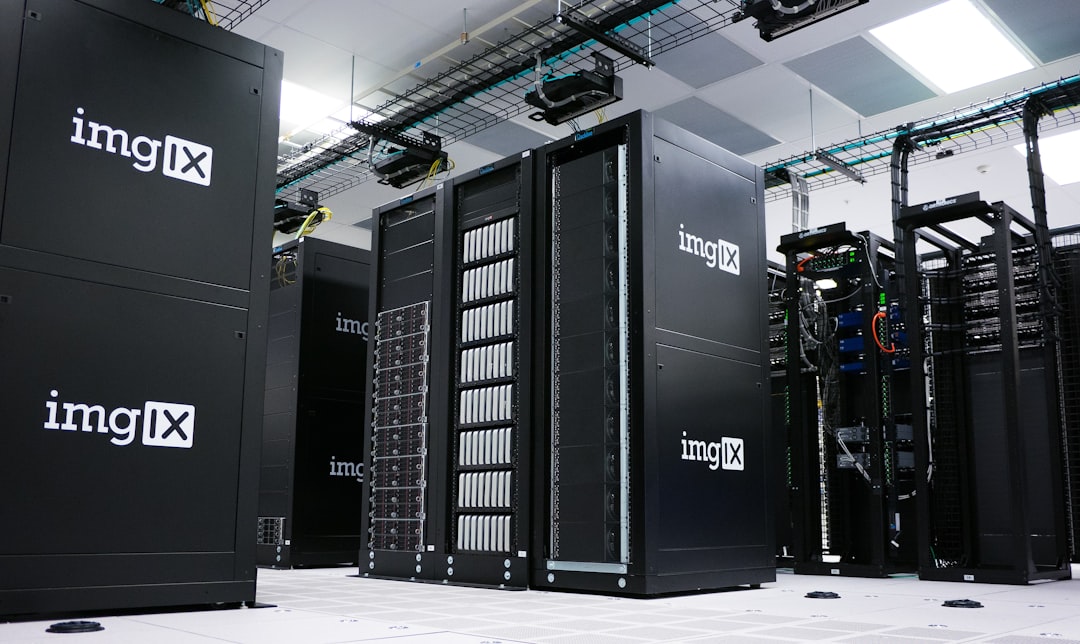
Nvidia, meanwhile, is powering the AI infrastructure behind the scenes. Its GPUs and AI computing platforms are essential for training and running advanced models. While consumers may not think of Nvidia as a direct ambient computing brand, many future services will depend on its chips in data centers, robots, vehicles, and edge devices.
What the Future May Actually Look Like
The most realistic outcome is not one dramatic replacement for the smartphone. Instead, the future will likely be a multi-device computing environment where the phone remains important but no longer carries the entire digital experience.
- Smart glasses may handle quick visual information, navigation, translation, and recording.
- AI agents may manage tasks across apps, calendars, documents, and services.
- Wearables may monitor health, identity, payments, and notifications.
- Cars may become intelligent computing spaces with entertainment, navigation, and autonomous features.
- Homes and offices may respond to voice, presence, energy use, and security needs.
This shift raises important concerns. Ambient computing depends on constant sensing, large-scale data processing, and AI decision-making. That creates risks around surveillance, manipulation, cybersecurity, bias, and dependency on a few dominant platforms. Serious adoption will require transparent data policies, user control, open standards, and regulatory oversight.
The Bottom Line
The leading technology companies are not abandoning smartphones; they are preparing for a world in which smartphones are only one part of a larger intelligent network. Apple is pushing spatial computing, Google is embedding AI into daily information flows, Meta is pursuing glasses and presence, Microsoft is transforming enterprise productivity, Amazon is building the intelligent home, and Samsung and Nvidia are supplying critical hardware foundations.
The winners will be the companies that make the next interface feel useful, trustworthy, and natural. Consumers will not adopt ambient computing simply because it is futuristic. They will adopt it when it saves time, improves work, protects privacy, and fits gracefully into ordinary life. The future beyond smartphones will not arrive all at once, but it is already being built.