
Every racing driver carries a recognizable pattern onto the track. Some attack corners with sharp inputs and late braking, while others build speed through smoothness, patience, and consistency. A racing driving style test helps identify that pattern, turning instinct into useful feedback that can improve lap times, tire management, confidence, and overall racecraft.
TLDR: A racing driving style test reveals how a driver naturally brakes, turns, accelerates, and responds under pressure. By understanding whether a driver is aggressive, smooth, analytical, reactive, or adaptive, coaching and practice become more focused. The result is not a fixed label, but a practical way to improve track performance, consistency, and decision-making.
What Is a Racing Driving Style Test?
A racing driving style test is an assessment designed to identify a driver’s habits behind the wheel. It may be based on track data, simulator sessions, instructor observation, self-assessment questions, or a combination of all four. The goal is to understand how a driver produces speed, not simply whether the driver is fast.
For example, two drivers may achieve the same lap time in very different ways. One may brake extremely late, rotate the car aggressively, and rely on quick corrections. Another may brake earlier, carry more mid-corner speed, and exit with better traction. Both methods can work, but each style creates different strengths, weaknesses, and risks.
Why Driving Personality Matters on Track
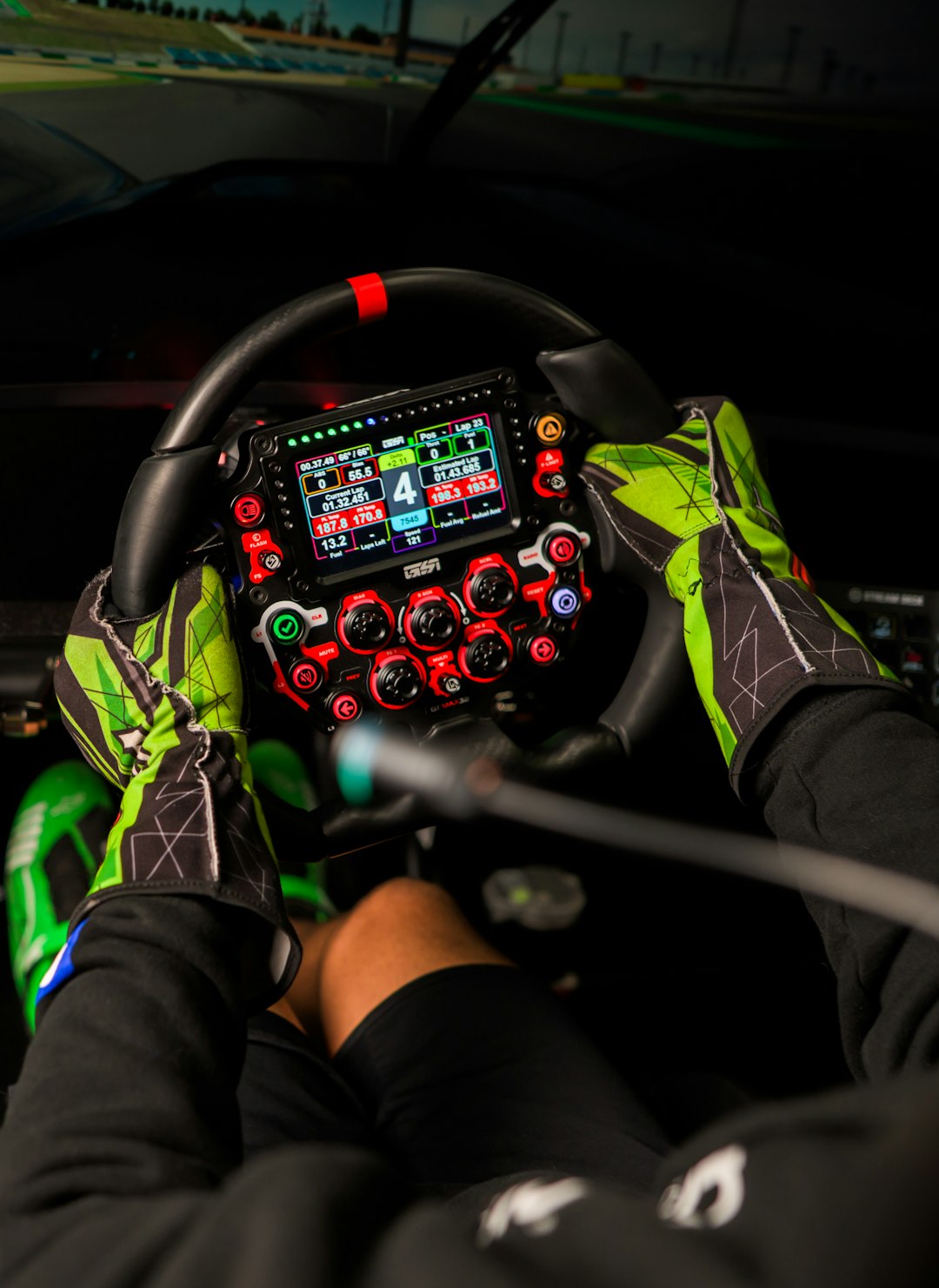
Driving personality affects every part of a lap. It influences braking points, steering speed, throttle application, overtaking choices, tire wear, and how the driver reacts when grip disappears. When a driver understands this personality, improvement becomes more targeted.
A driver who is naturally bold may need to work on patience and precision. A cautious driver may need to develop commitment in high-speed corners. A perfectionist may need to make faster decisions in traffic. A reactive driver may need to plan corners earlier and rely less on instinctive corrections.
The test does not decide whether one style is “good” or “bad.” Instead, it highlights the habits that shape performance. In racing, awareness is often the first step toward control.
Common Racing Driving Styles
Most drivers display a blend of styles, but one or two traits usually dominate. A well-designed test helps identify the primary pattern.
- The Late Braker: This driver gains time by pushing braking zones deeper than competitors. The strength is confidence under deceleration. The weakness may be compromised corner entry, overheated brakes, or unstable rotation.
- The Smooth Operator: This driver uses gentle inputs, clean lines, and progressive throttle. The strength is consistency and tire preservation. The weakness may be hesitation when aggression is required.
- The Technical Analyst: This driver studies data, braking traces, sector times, and racing lines. The strength is methodical improvement. The weakness may be overthinking instead of driving naturally.
- The Instinctive Attacker: This driver relies on feel, reflexes, and bold moves. The strength is adaptability during unpredictable moments. The weakness may be inconsistency or unnecessary risk.
- The Defensive Strategist: This driver thinks in terms of race position, traffic, and overtaking prevention. The strength is racecraft. The weakness may be sacrificing pure lap time for protection too early.
Key Areas Measured in a Driving Style Test
A useful racing driving style test usually examines several core behaviors. These categories give a fuller view than lap time alone.
- Braking behavior: How late, hard, and consistently the driver brakes before corners.
- Steering input: Whether steering is smooth and progressive or fast and corrective.
- Throttle control: How early and how aggressively power is applied on corner exit.
- Racing line selection: Whether the driver prioritizes entry speed, apex precision, or exit drive.
- Pressure response: How the driver behaves when chased, blocked, or forced off the ideal line.
- Adaptability: How quickly the driver adjusts to tire wear, changing fuel load, weather, or traffic.

How the Test Improves Track Performance
The biggest value of a racing driving style test is that it transforms vague advice into specific action. Rather than telling a driver to “be faster,” the test can reveal that the driver is losing time by releasing the brake too quickly, turning in too early, or applying throttle before the car is ready.
For the late braker, improvement may involve trail braking with more stability and sacrificing a small amount of entry speed for a stronger exit. For the smooth operator, the focus may be raising minimum corner speed and trusting the car at higher slip angles. For the technical analyst, the priority may be simplifying focus points rather than chasing too many data channels at once.
Track performance improves when the driver practices according to style. A natural attacker should not be forced to become passive, but should learn controlled aggression. A cautious driver should not be pushed into reckless driving, but should gradually expand comfort zones through structured drills.
Using Test Results in Practice Sessions
After a driver’s style is identified, the next step is to create a practice plan. The most effective plans focus on one or two behaviors per session. Trying to change everything at once often leads to confusion and slower lap times.
A sample practice plan might include:
- Session one: Establish consistent braking reference points and compare lap-to-lap variation.
- Session two: Focus on smoother steering inputs through medium-speed corners.
- Session three: Work on earlier throttle application only after the car is properly rotated.
- Session four: Practice alternate racing lines for overtaking and defending.
This style-based approach makes coaching more personal. It also helps drivers understand why certain mistakes keep appearing. A driver who repeatedly misses apexes may not have an apex problem; the actual issue may be excessive entry speed or delayed vision.
Simulator Testing Versus Real Track Testing
Simulators are valuable for identifying tendencies in a controlled environment. They allow repeated laps, quick resets, and safe experimentation. A driver can test braking points, steering techniques, and throttle timing without the cost of tires, fuel, or mechanical wear.
However, real track testing reveals physical sensations that a simulator may not fully reproduce. Grip changes, fear, heat, vibration, and fatigue all influence driving personality. A complete assessment often combines simulator data with real-world observation.
Turning Personality Into Competitive Advantage
The purpose of a racing driving style test is not to put a driver into a permanent category. Racing rewards evolution. The best drivers keep their natural strengths while borrowing techniques from other styles.
A smooth driver can learn aggression for qualifying laps. An attacking driver can develop tire-saving discipline for long races. A data-focused driver can build instinct through repetition. A defensive strategist can learn when to stop protecting and start chasing.
The most competitive drivers are not styleless; they are style-aware. They understand their default behavior, recognize when it helps, and know when it must change. That awareness can be the difference between a fast lap and a complete race performance.
FAQ
What is a racing driving style test?
It is an assessment that identifies how a driver naturally brakes, steers, accelerates, chooses racing lines, and reacts under pressure. It helps connect driving habits with performance outcomes.
Can a driving style test make a driver faster?
Yes, when the results are used correctly. The test itself provides insight, but improvement comes from applying that insight through focused practice, coaching, and data review.
Is one racing style better than another?
No single style is best in every situation. Aggressive, smooth, analytical, and strategic styles can all be effective. The key is knowing when each approach helps or hurts performance.
How often should a driver retake the test?
A driver may retake the test after major coaching periods, moving to a new car class, changing tracks, or noticing repeated performance issues. Driving style can evolve with experience.
Can beginners use a racing driving style test?
Yes. Beginners may benefit greatly because the test helps build awareness early. It can prevent bad habits from becoming deeply ingrained and gives practice sessions a clear direction.